


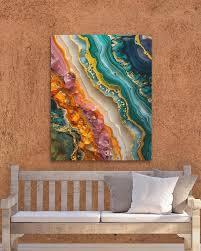
In contemporary art, scale and abstraction play a crucial role in shaping how we experience a space. When landscape-inspired themes are expressed on a large scale, the impact becomes immersive and emotional. Big abstract landscape art brings together expansive composition, subtle movement, and a deep connection to the natural world. These works do not describe a place in literal terms; instead, they evoke the feeling of land, light, and atmosphere.
For galleries and collectors drawn to large-scale contemporary works, abstract landscape paintings offer a powerful balance between nature and modern expression. Their presence transforms walls into visual environments, creating space for reflection and quiet engagement.
Understanding Big Abstract Landscape Art
Big abstract landscape art refers to large-format paintings that take inspiration from land, terrain, horizons, and atmospheric conditions without relying on direct representation. Rather than depicting trees, mountains, or skies in a traditional way, these works suggest landscape through color, texture, movement, and spatial depth.
Abstraction allows the artist to move beyond geography and into emotion. Viewers are not told what to see; instead, they are invited to feel the openness of a horizon, the weight of land, or the stillness of light. The large scale amplifies this experience, allowing the painting to surround the viewer visually.
This approach aligns naturally with contemporary galleries that explore land and light as ongoing themes rather than fixed subjects.
The Importance of Scale in Abstract Landscape Paintings
Scale changes everything. Big abstract landscape art does not behave like small or medium-sized works. It establishes presence. The viewer does not simply look at the painting; they stand before it.
Large surfaces allow for gradual transitions of tone, layered textures, and expansive compositions that mirror the experience of being in nature. Just as landscapes unfold slowly in real life, these paintings encourage extended viewing and contemplation.
In gallery spaces, large abstract landscapes often act as anchors, setting the emotional tone of the room. They bring calm, depth, and a sense of openness that smaller works cannot achieve.
Abstraction as a Way to Experience Landscape
Abstraction removes the need for precise detail. In Big abstract landscape art, this freedom allows the essence of landscape to come forward. Color fields may suggest sky or earth, horizontal lines may hint at land meeting light, and textured surfaces may recall erosion or natural layering.
Because the imagery is not literal, viewers bring their own experiences into the work. One person may see a coastline, another a desert, another an aerial view of land. This openness is one of the greatest strengths of abstract landscape painting.
It creates an emotional connection rather than a descriptive one, making the artwork feel personal and timeless.
Texture, Movement, and Material Presence
Texture plays a vital role in Big abstract landscape art. Large paintings often feature layered surfaces that create physical and visual depth. These textures echo natural processes such as weathering, sedimentation, and movement across land.
Subtle shifts in surface catch light differently throughout the day, adding a quiet sense of movement. This interaction between texture and light gives the painting a living quality, allowing it to evolve with its environment.
Rather than overpowering a space, these textures bring balance and grounding, reinforcing the connection between art and nature.
The Relationship Between Light and Abstract Landscapes
Light is central to how Big abstract landscape art is experienced. Large abstract paintings respond dynamically to natural and artificial light, revealing tonal variations and depth over time.
Soft transitions between light and dark areas create a sense of atmosphere, similar to how light behaves across open land. This makes the artwork feel integrated into the space rather than separate from it.
In well-lit interiors or gallery settings, abstract landscape paintings gain additional dimension, encouraging repeated viewing as conditions change.
Why Big Abstract Landscape Art Works in Modern Interiors
Modern architecture often emphasizes clean lines, open spaces, and minimal ornamentation. Big abstract landscape art complements this aesthetic perfectly. Its scale matches expansive walls, while its organic forms soften structured environments.
Rather than competing with furniture or architectural elements, large abstract landscapes create harmony. They add warmth, depth, and visual interest without overwhelming the space.
Designers and collectors value these works for their versatility. Neutral or earth-based palettes blend effortlessly with contemporary interiors, while the abstract nature of the work keeps it relevant as styles evolve.
Collecting Big Abstract Landscape Art
Collecting Big abstract landscape art is about investing in presence and longevity. These works are not trend-driven; they draw from the enduring human connection to land and space.
Because abstract landscapes are open to interpretation, they remain engaging over time. Viewers continue to discover new details, moods, and meanings, making the artwork feel fresh even after years of living with it.
Large-scale works also carry strong visual authority, making them focal points in both private and public collections. Their ability to define a space adds to their long-term value.
A Contemporary Expression of Land and Space
At its core, Big abstract landscape art reflects a modern way of engaging with nature. Instead of documenting specific places, it captures the sensations of openness, stillness, movement, and light.
This approach resonates deeply in contemporary art spaces focused on material, scale, and atmosphere. It allows landscape to exist as an idea rather than a location something felt rather than seen.
Such works bridge the gap between the external world and internal experience, offering moments of calm and reflection within modern environments.
Conclusion
Big abstract landscape art holds a unique position in contemporary fine art, combining expansive scale with emotional subtlety. Through abstraction, texture, and interaction with light, these paintings evoke the essence of land without limiting interpretation. Their large format creates immersive experiences that shape both gallery spaces and interiors.
Rooted in landscape yet expressed through modern abstraction, these works offer depth, presence, and timeless appeal. For collectors and galleries drawn to art that reflects land, light, and space in a refined and contemporary way, Big abstract landscape art remains a powerful and enduring choice.

 English
 Arabic
 French
 Spanish
 Portuguese
 Deutsch
 Turkish
 Dutch
Dutch
 Italiano
 Romaian
 Portuguese (Brazil)
 Tiếng Việt