


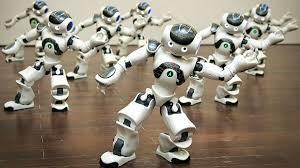
Market Overview and Growth Snapshot The integration of Generative AI (like LLMs) has completely revitalized the Entertainment Robots Market. In the past, educational robots had limited, scripted responses. Today, they can engage in free-flowing, creative conversations, making them the ultimate "Edutainment" tools. This technological leap is expected to push the educational segment to a nearly 40% market share by the end of 2026.
Key Drivers and Market Dynamics The core driver is the Personalization of Learning. Every child learns at a different pace. An AI-powered entertainment robot can act as a tutor that never loses patience, gamifying lessons in math, history, or coding. The market is also driven by the "Always-On" nature of these devices; unlike a human tutor, a robot is available for play and learning 24/7.
Segmentation and Regional Insights The market is divided into Early Childhood and K-12 education. North America and the UK are the fastest-growing regions for "Home Learning" robots, as parents look for high-tech alternatives to screen time. In India and China, the focus is on "Classroom Assistants" that help teachers manage large groups of students.
Competitive Landscape and Opportunities Companies like Lego and Sphero are now competing with software companies that provide the "brains" for the hardware. A massive opportunity exists in "Global Language Learning," where robots act as native-speaking conversation partners for students learning a second language.
Future Outlook In the near future, Entertainment Robots Market products will likely feature "Long-Term Memory." The robot will remember a child's progress over years, evolving its personality and difficulty levels as the child grows from a toddler into a teenager.
FAQs
-
How does Generative AI help? It allows robots to have natural, unscripted conversations with users.
-
Are these robots replacing teachers? No, they are designed as "teaching assistants" to enhance the learning experience.
-
What is the "K-12" segment? It refers to the primary and secondary education levels (Kindergarten through 12th grade).

 English
 Arabic
 French
 Spanish
 Portuguese
 Deutsch
 Turkish
 Italiano
 Russian
 Romaian
 Portuguese (Brazil)
 Tiếng Việt