


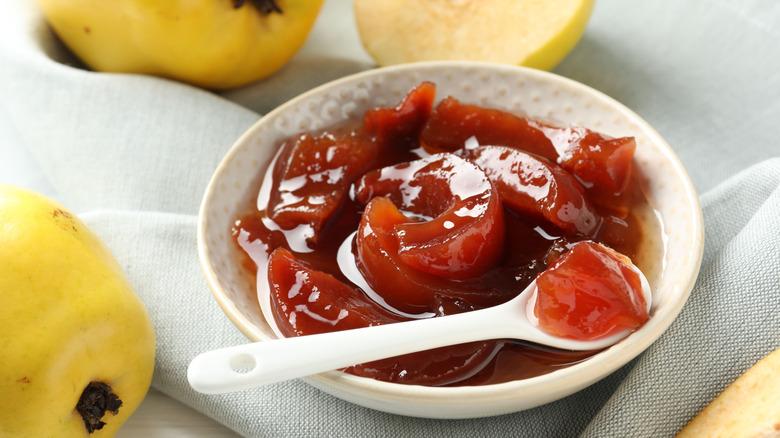
In the rich culinary heritage of Pakistan, few preserves carry as much nostalgia and wellness value as quince murabba. Known locally as bahi dana ka murabba, this golden, syrupy sweet has been a winter staple in many households for generations. Prepared slowly with patience and care, quince murabba is more than just a condiment it is a symbol of traditional wisdom, natural healing, and desi taste.
In many regions of Pakistan, quince is also recognized by another name, safar e jal fruit, and it has long been valued in Unani and herbal traditions for its warming and strengthening properties.
What Is Quince (Bahi Dana)?
Quince is a hard, aromatic fruit that resembles a pear but has a firmer texture and slightly fuzzy skin. When raw, it is quite astringent and sour, which is why it is rarely eaten fresh. However, once cooked, quince transforms beautifully into a fragrant, soft, and ruby-golden delicacy.
In Pakistan, quince grows mainly in colder regions such as Balochistan, Khyber Pakhtunkhwa, and northern Punjab. The fruit appears in local markets during late autumn and winter, making it ideal for seasonal preserves like murabba.
Cultural Importance of Quince Murabba in Pakistan
Quince murabba holds a special place in Pakistani kitchens, especially in traditional households. It is commonly served at breakfast with paratha, roti, or alongside butter and cream. Elders often recommend it during winter for strength and digestion.
In desi culture, murabba is not just food it is dawa (remedy). From newly married couples to elderly family members, quince murabba is believed to support overall vitality. The use of safar e jal fruit in murabba has been passed down through generations as part of home-based wellness practices.
Nutritional Value of Quince Murabba
Although murabba contains sugar, quince itself is packed with beneficial nutrients. When consumed in moderation, quince murabba can be a nourishing addition to the diet.
Key Nutrients in Quince
-
Dietary fiber for digestion
-
Vitamin C for immunity
-
Potassium for heart health
-
Natural antioxidants
The safar e jal fruit is particularly valued for its warming nature, which makes it suitable for cold weather and weak digestive systems.
Health Benefits of Quince Murabba
Supports Digestive Health
Quince has natural compounds that help soothe the stomach. Traditional hakims in Pakistan often recommend quince murabba for acidity, bloating, and weak digestion.
Boosts Energy and Strength
Because murabba is cooked slowly in sugar syrup, it provides quick energy. This is why it is often given to people recovering from illness or general weakness.
Helpful in Winter Ailments
The warming effect of safar e jal fruit makes quince murabba beneficial during winter. It may help reduce cold-related discomforts and support respiratory health when eaten regularly in small amounts.
Beneficial for Women’s Health
In traditional Unani medicine, quince is considered helpful for hormonal balance and overall reproductive health. Many households still prepare quince murabba at home for this reason.
How Quince Murabba Is Traditionally Made
Making quince murabba at home is a slow but rewarding process. While methods may vary slightly by region, the traditional Pakistani technique remains largely the same.
Ingredients Used
-
Fresh quince (bahi dana / safar e jal fruit)
-
Sugar
-
Water
-
Lemon juice or citric acid
-
Optional spices like cloves or cardamom
Basic Preparation Method
-
Quince is washed, peeled, and cut into equal-sized pieces.
-
The pieces are soaked to prevent discoloration.
-
Sugar syrup is prepared separately.
-
Quince is cooked slowly in the syrup until it turns translucent and absorbs sweetness.
-
Lemon juice is added at the end to preserve color and balance flavor.
The murabba is then cooled and stored in airtight glass jars, often lasting several months.
Homemade vs Market Quince Murabba
In Pakistan, both homemade and commercially produced quince murabba are widely available. Each has its own appeal.
Homemade Murabba
-
No artificial preservatives
-
Customizable sweetness
-
Traditional taste
-
More nutritious
Market Murabba
-
Convenient and time-saving
-
Consistent texture
-
Easily available year-round
When buying from the market, it is important to check the ingredient list and ensure that real safar e jal fruit is used rather than artificial flavors.
How to Eat Quince Murabba
Quince murabba can be enjoyed in several simple ways:
-
With paratha or roti at breakfast
-
Alongside yogurt or fresh cream
-
As a small dessert after meals
-
With warm milk during winter nights
Moderation is key, especially for people managing sugar intake.
Why Quince Murabba Is Still Relevant Today
Despite the availability of modern jams and spreads, quince murabba continues to hold its place in Pakistani households. The growing interest in natural, traditional foods has brought renewed attention to old recipes made from fruits like safar e jal fruit.
In a time when people are moving back toward organic and heritage foods, quince murabba stands out as a perfect example of how taste and health can go hand in hand.
Final Thoughts
Quince murabba is not just a sweet preserve it is a reflection of Pakistan’s rich food culture and traditional healing practices. Made from the nourishing safar e jal fruit, it offers warmth, flavor, and comfort, especially during colder months.
Whether prepared at home or purchased from a trusted source, adding quince murabba to your diet can be a delicious way to reconnect with traditional Pakistani wellness. With its unique taste and long-standing reputation, this classic murabba truly deserves a place on the modern dining table.

 English
 Arabic
 French
 Spanish
 Portuguese
 Deutsch
 Dutch
Dutch
 Italiano
 Russian
 Romaian
 Portuguese (Brazil)
 Tiếng Việt